Synergy in Art, Mathematics, and Design
We often encounter the use of pattern in architecture that is the equivalent of a simple melody like Row Row Row Your Boat. At its best it is played by an accomplished musician on a fine instrument, i.e. a skilled designer uses high quality materials and an appropriate style to express the lines in that medium. As Architects and designers must we be only musicians who play simple traditional melodies? Where can we experience the equivalent of a symphony or fugue in the patterns that come together to make a whole architectural composition? Can we strive to design at this level? This course begins to answer these questions by laying the foundation necessary to become a composer as well as a musician. This foundation comes from study of the mathematics of patterns, Traditional styles of ornament and structure (with an emphasis on Medieval Middle Eastern styles) and combines with new tools for expression such as computer software (Rhino[script], Grasshopper) and systems of assembly (crossing slats) to form a greater whole than the sum of their parts.
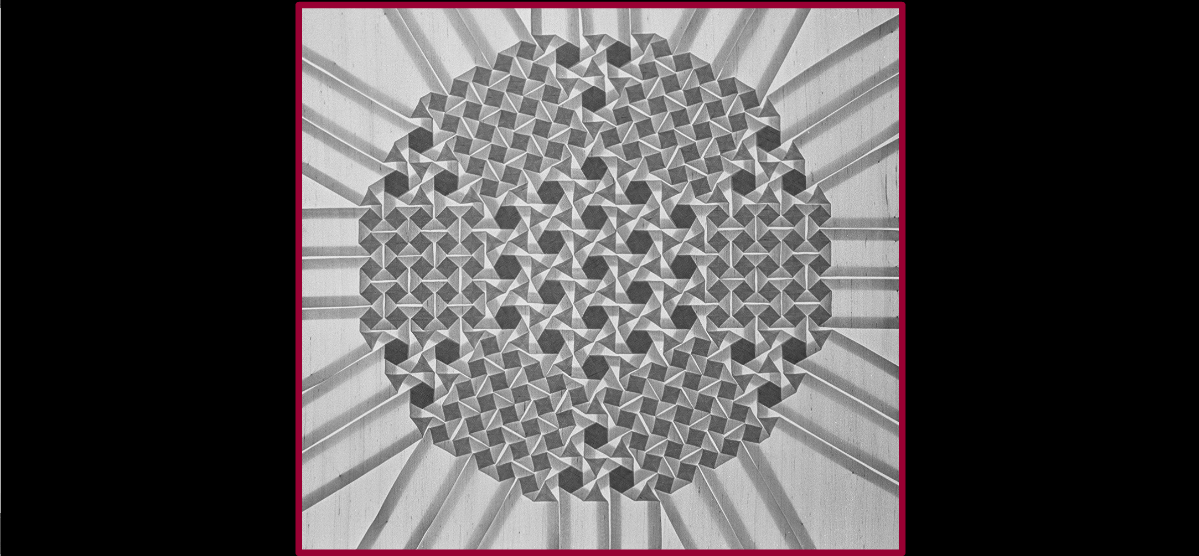
Striving to imitate the beauty found in natural form is as old as Art. Many efforts to produce abstract representations of biological and geological patterns have led to the development of styles and Traditional methods to capture the essence of these patterns. These methods typically distill order from fields of more complex and sometimes overwhelming order so they can be better comprehended. A Mandelbrot fractal exhibits beautiful recursive properties and wonderfully exhibits the hierarchies of form found in nature but such patterns cannot be constructed easily by hand either with a drawing or as objects to manipulate and compose with. This is in contrast to recursive patterns from the middle ages and before which draw on equally complex fields of order but distill them into forms that can be understood and used even by a child. They still point to the higher richer complexities of order but these are there to be experienced by imagination if the observer chooses and desires to seek them not forced all together in an overload of information that confuses and overwhelms. See Lines Diagram. This is the ancient aesthetic that guides the compositions students explore that express a hierarchy of interrelated pattern on pattern expressed by corresponding thickness of material and depths of slats.
To paraphrase G. K. Chesterton students are encouraged by studying Tradition to become citizens of the Democracy of the Ages rather than subjects of the arrogant oligarchy of those who merely happen to be walking around.